
Solar·13 October 2026·4 min read
Net Metering in Zambia: Can You Sell Solar Power to ZESCO?
Zambia has passed 1,000MW of solar. Here's how ZESCO's net metering works, what exported power is worth in 2026 and what you need to apply.

Zambia's solar boom has reached a milestone. On 7 October, President Hakainde Hichilema said installed solar capacity has grown from 178MW in 2024 to 1,027.5MW, passing the 1,000MW target set for 2026.
If you already have panels, or you're thinking about them, you've probably heard you can "sell power back to ZESCO". That's partly true. Here's how net metering actually works in Zambia, what your exported power is worth in 2026, and how to decide whether it's worth applying.
What net metering means
Net metering lets a ZESCO customer who generates their own renewable electricity - usually from solar - send any surplus into the national grid. ZESCO calls these customers prosumers: they both produce and consume power.
The programme opened on 1 August 2024 under the Electricity (Net Metering) Regulations, 2024. When your panels produce more than your home or business is using, the extra flows into the grid and you earn bill credits. The value of the power you export is used to reduce your current or future bills.
Two limits matter from the start:
- Your generation is capped at your contracted or declared demand with ZESCO. In other words, you can't install a huge system on a small connection and run a power station from your roof.
- You need a grid-tied inverter. ZESCO asks prosumers to use grid-tied inverters, and not every backup inverter is designed to connect to the grid. ZESCO publishes the recommended equipment and technical specifications on its website.
What your exported power is worth in 2026
This is where expectations need adjusting. The Energy Regulation Board (ERB) sets a reference tariff for net metering each year. For 2026, it kept the net metering tariff at US$c6.00 per kWh, which the ERB translated to K1.350 per kWh. It also capped the distribution use-of-system charge ZESCO may levy for the programme at US$c3.00 per kWh (K0.66).
Now compare that with what households pay to buy power. Under ZESCO's current residential schedule (for connections up to 15kVA), the energy charge is K0.35 per kWh for the first 100 units, K1.00 for 100-200 units, K2.42 for 200-400 units and K3.45 for anything above 400 units a month. ZESCO's tariff page also lists higher "pre-approved" rates for 2026/2027, so check which rate applies to your account.
The lesson: once your monthly use reaches the higher bands, a unit of solar you use yourself is worth more than a unit you export. Size your system around your own daytime use, and treat exports as a bonus, not the business case.
Confirm the exact billing treatment for your account with ZESCO before you invest, because tariffs differ between customer categories.

Who should consider applying
Net metering tends to make most sense if you:
- Already have, or are planning, a solar system with a grid-tied or hybrid inverter.
- Produce more power around midday than you use - for example a home that is empty during the day, or a business that closes at weekends.
- Plan to stay in the property. If the property changes owner, ZESCO closes the net metering account and the new owner must apply afresh.
It makes less sense if your system is small and you already use everything it produces, or if your main goal is backup power during outages. In that case, batteries matter more than exports.
How to apply
Applications are made online through ZESCO's Net Metering Management System at netmetering.zesco.co.zm, where you can also track progress from approval to commissioning. You can also ask at your nearest ZESCO walk-in centre. Before you start, the portal asks you to have:
- Your ZESCO account number or meter number.
- A copy of your national ID or passport - or, for a business, the certificate of incorporation.
- Your Taxpayer Identification Number (TPIN).
- A consent letter from your landlord, if you rent the property.
- The property's GPS coordinates or a nearby landmark.
After your application is approved and the fees are paid, you sign two agreements with ZESCO: a Net Metering Supply Agreement and a Net Metering Connection Agreement. ZESCO said at launch that applicants pay an administrative fee set by the ERB and pay for the net meter itself; confirm the current amounts with ZESCO when you apply. In 2025 ZESCO ran a promotion waiving these costs for the first 1,000 eligible customers, so it's worth asking whether any offer is running now.
Common mistakes to avoid
- Buying the wrong inverter. If exporting is part of your plan, make sure the inverter is designed to connect to the grid before you pay.
- Oversizing to "make money". Exported units are valued well below the top household rate, so a bigger system mainly for exports may not pay back as fast as you expect.
- Forgetting batteries. Net metering doesn't keep your lights on during a ZESCO fault. If outages cost you money, you still need storage.
- Skipping the landlord. Tenants need written consent before applying.
How Rayema Enterprise helps
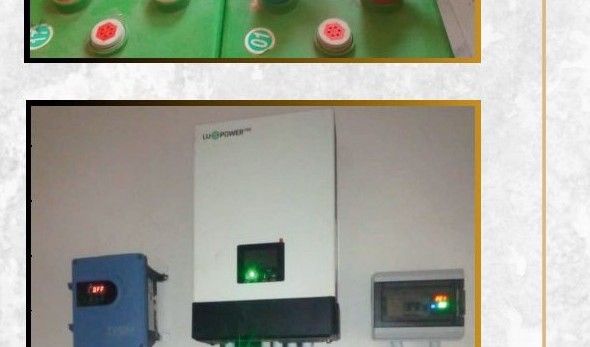
Rayema Enterprise supplies and installs complete solar inverter systems from 3kVA for homes to 15kVA for commercial premises, with lithium or lead-acid battery banks. We offer a free site survey and load assessment, so your system is sized around what you actually use.
If you're interested in net metering, mention it during the survey. We'll factor it into the system recommendation, so you know whether a grid-connected setup makes sense for your property before you spend anything. The net metering application itself is made to ZESCO.
See our solar service or get in touch to book your free assessment.
Need help with solar?
Rayema Enterprise handles it end to end, with a transparent fixed-price quote before any work begins and a 24-hour response time.
Learn more about our Solar Energy Solutions service →Get the Zambia business brief
One short email a day: what changed for businesses in Zambia, and what it means for you. Free, unsubscribe any time.
Comments
Loading comments...